
2026 IIHS Crash Test Results: Are Minivans Like Kia Carnival and Honda Odyssey Safe for Families?
Daniel Kim Views
Translation result.
You trusted the minivan…
Shocking IIHS crash‑test results
Is the family‑car safety myth starting to crack?
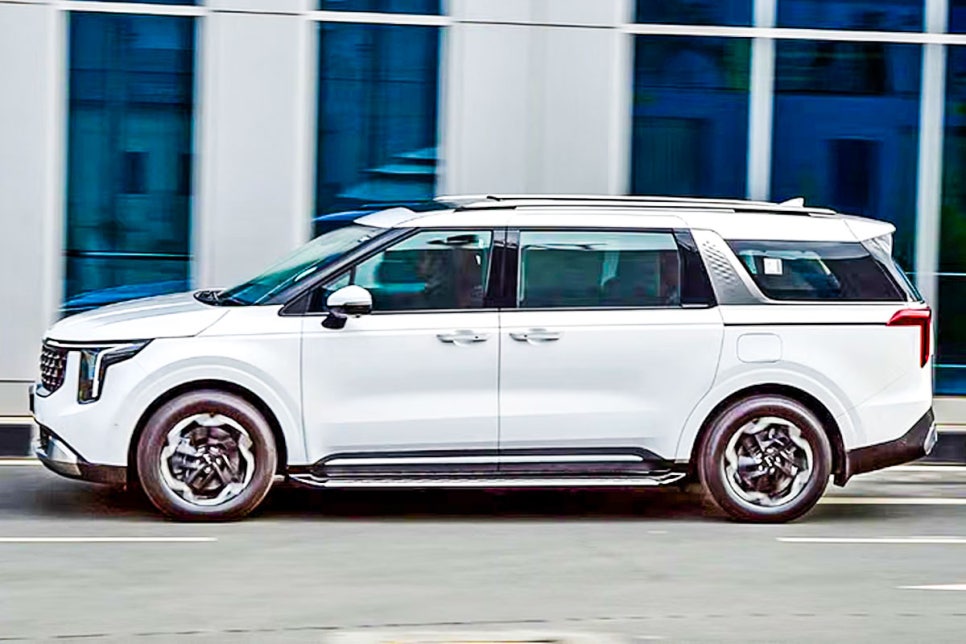
Carnival – Source: Kia
In its latest round of testing, the U.S. Insurance Institute for Highway Safety (IIHS) focused on rear‑seat protection.
The four leading minivans tested all failed to earn the top IIHS rating.
The models tested were:
-
Kia Carnival
-
Toyota Sienna
-
Honda Odyssey
-
Chrysler Pacifica
As a result, none of the vehicles qualified for the IIHS Top Safety Pick award.
Rear seats are the issue…
All fell short under stricter standards
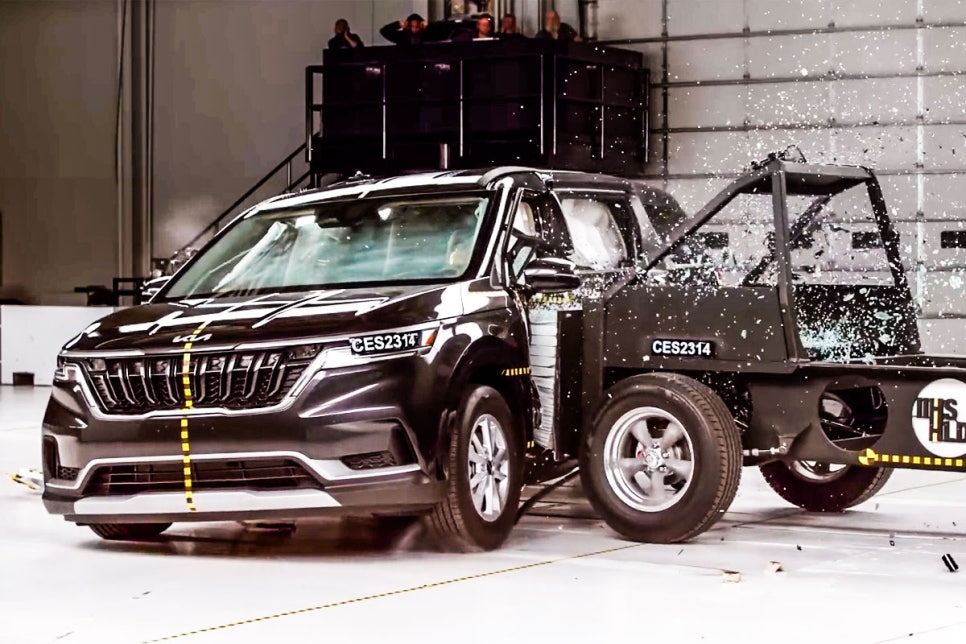
Kia Carnival crash test – Source: IIHS
This round emphasized second‑row occupant protection.
Previously, IIHS evaluations prioritized front‑seat protection. This year it raised the bar and made rear‑seat safety a core requirement.
IIHS also used child‑sized test dummies to better reflect real family crash scenarios.
That change made the tests more realistic for families with children.
Carnival rated ‘Marginal’
Poor head and chest protection
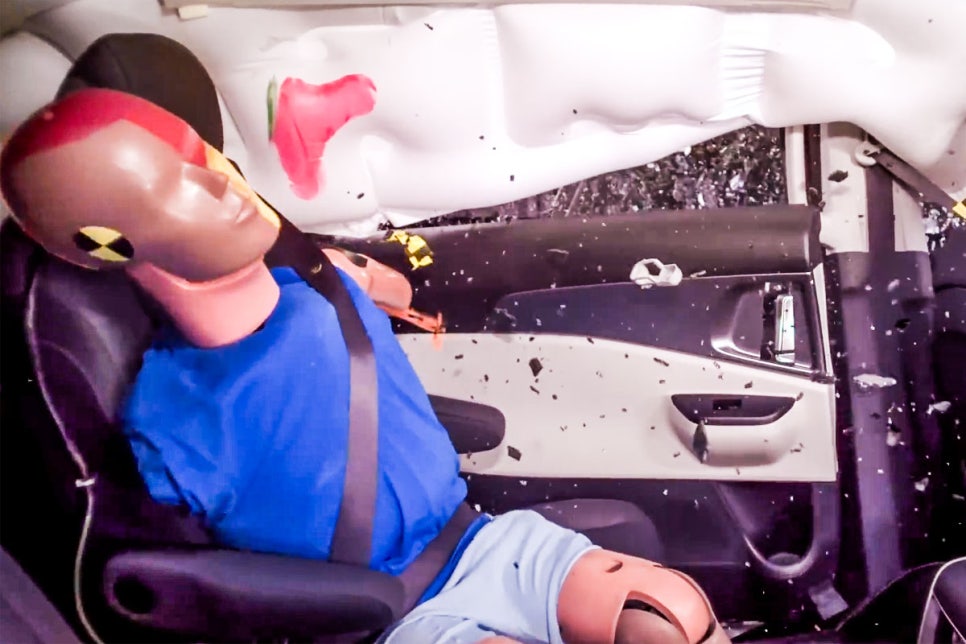
Kia Carnival crash test – Source: IIHS
IIHS gave the Carnival a \”Marginal\” rating for head, neck and chest protection for second‑row occupants.
That indicates crash energy wasn’t absorbed or dispersed effectively and was transferred to rear‑seat passengers.
Other models showed similar weaknesses.
-
Odyssey: rated \”Poor\”
-
Sienna: experienced submarining (sliding under the lap belt)
Analysts say the results expose structural limitations common across current minivan designs.
Might as well buy an SUV
Could the market shift?
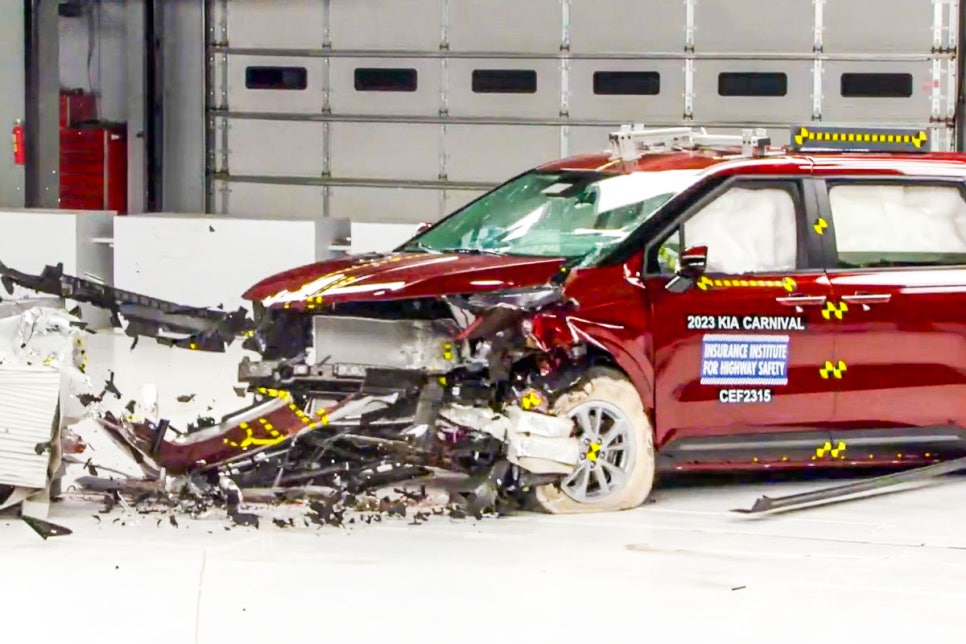
Kia Carnival crash test – Source: IIHS
Experts point to three primary causes: seatbelt geometry, pretensioner tuning and a second‑row structure that doesn’t absorb crash loads effectively.
They say automakers often prioritized roomy interiors and sliding‑door packaging, which can leave rear‑seat crash performance lagging.
In an unusual move IIHS suggested that families consider SUVs or sedans as alternatives.
Recent mid‑ and large‑size SUVs have posted strong results under the tougher IIHS protocols,
strengthening the case for those segments.
More than a test score, the result challenges the long‑standing notion that a family car must be a minivan.
Going forward, consumers may weigh a different priority than interior space.
How well a vehicle protects family members in a real crash is likely to become the deciding factor.
Buyers will scrutinize that aspect more closely.










Most Commented